Supervision
Mission Statement
Navigating academic and professional growth is truly an investment in one’s well-being and quality of life. Feeling empowered and prepared to support others as they process complex emotions and daunting experiences in an unbalanced world is a significant responsibility of all mental health professionals. My goal as a supervisor is to create a welcoming space for this growth and I consider it a privilege to accompany other professionals in the counseling field as they build their professional identity.

Supervision Model
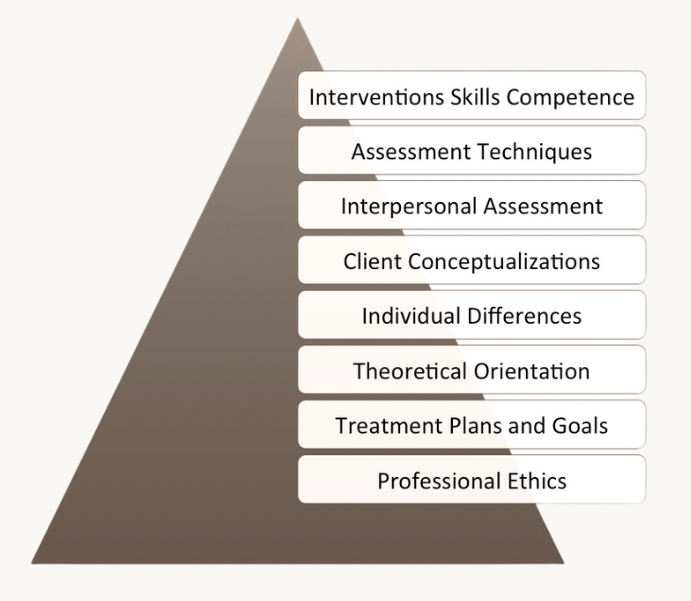
My supervision style aligns with Stoltenberg and McNeill’s Integrated Developmental Model (IDM) which outlines a supervisee’s development across three levels and has a final, third integrated level. Each level and skill area is assessed in the competencies of autonomy, motivation, and self-other awareness. The supervision process explores skill areas across eight domain areas including 1) intervention skills, 2) assessment techniques, 3) interpersonal assessment, 4) client conceptualization, 5) individual differences, 6) theoretical orientation, 7) treatment planning and goal setting, and 8) professional ethics. I have incorporated a ninth area to include emphasis on 9) risk factors to the supervisee’s development and self care of the supervisee.
Supervision Developmental Goals
Goal Area 1:
Advocate for continued growth of supervisees through additional supervision opportunities aligned with their personal motivation and growth trajectories
Actionable Steps:
Explore site and experiential placement opportunities more aligned with supervisee goals and interests
Clarify site's role and scope of supervisory practices to ensure holistic and individualized support of supervisees
Explore continuation of site placement assignments across supervisee’s practicum, internship, and professional experiences to increase feedback, rapport, and less burnout and stress for supervisee
Create a comprehensive standard of supervision experiences that integrate group, individual, and community counseling endeavors to holistically build supervisee’s experiences and exposures while under supervision
Goal Area 2:
Integrate the IDM framework into evaluation and assessment procedures that is cognizant of supervisee’s bidirectional development as well as their perceptions of the supervision experience and supervisory relationship to increase motivation and autonomy.
Actionable Steps:
Develop a supervisee evaluation questionnaire that is representative of the supervisee’s perception of supervisory support in both internal and external challenges related to transition and exposure to the counseling profession
Implement regular feedback opportunities across IDM domain areas to increase autonomy of supervisee and bring awareness to need areas in the supervision experience
Integrate the potential for bidirectional development that is less linear to acknowledge the potential for setbacks in the supervisees development, including but not limited to vicarious trauma, burnout, low support, ethical and legal dilemmas, licensure issues, financial considerations of the profession, and sudden termination of services with clients.
Supervision Experience and Evaluations
My current supervisory experience includes working with four masters-level students in their practicum experience working in different settings across Pennsylvania and West Virginia. In 2025, I supervised one student who saw individuals across the life span and facilitated group therapy for community members navigating substance use disorders. My second supervisee partook in wrap-around services and provided services in community, clinic, and in-home settings. This entailed a variety of experiences focusing on substance use, domestic abuse, and family trauma. Since May 2026, I have been partaking in two additional supervisee experiences. Both supervisees are recipients of the University Workforce Development Program (UWDP) that is supported by the Pennsylvania Department of Drug and Alcohol Programs (DDAP). Together we are navigating individual and group therapy for treating substance use disorder through trauma-informed, humanistic approaches. All four supervisory experiences have been guided by the principles outlined with the Integrative Developmental Model (IDM) framework with trauma-informed practices integrated throughout. My professional goals for expanding my supervision experience and training include working towards my West Virginia Approved Licensed Professional Supervisor (ALPS) certificate.
Supervision Agreement
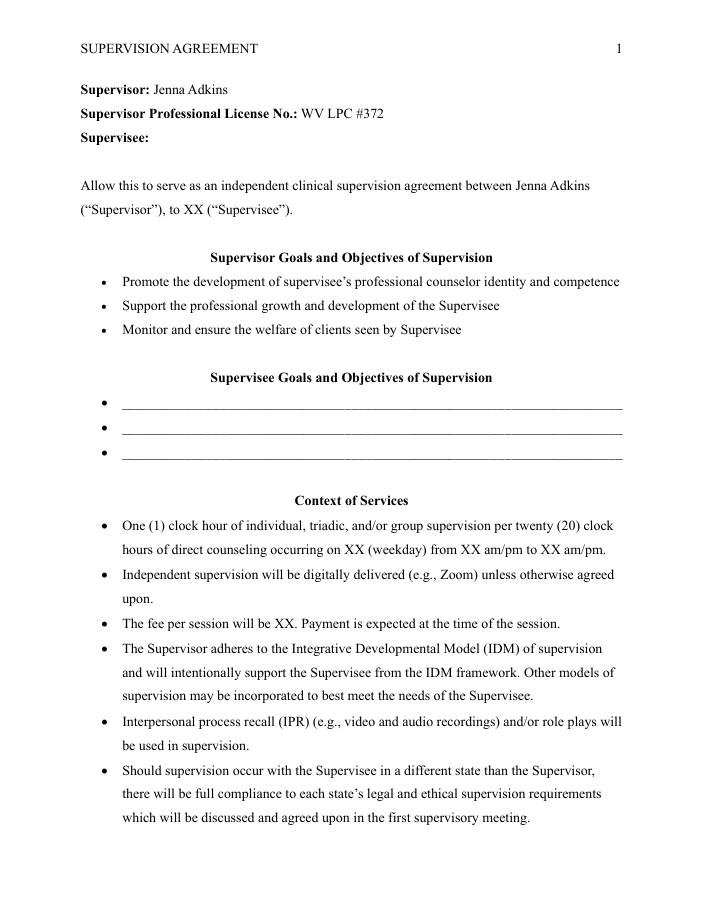
The supervision agreement serves as a contract to outline supervisory goals, expectations, and context of services. The agreement provides all necessary information to both the supervisor and supervisee regarding their individual aspirations for the supervisory relationship and methods of achieving these. This agreement is conducted collaboratively to ensure that the process is transparent, holistic, and ethical to the welfare of the supervisee and their practice.
Supervision Session Note
The supervision session note is a form that provides structure and organization to the topics discussed each supervision session. The form is designed to address the Integrative Developmental Model (IDM) competencies, domains, and levels. Not all elements of the form must be filled out each supervision session as a supervision session may only address the necessary components to the supervisee’s needs and experiences at that time; however, this form does provide a method of monitoring progress and growth over time as there are sections to include ratings and feedback for actionable steps to increase the domain skill areas.

Supervision Termination Summary
The supervision termination summary is a document that provides an overview of the agreement to terminate supervision services. This form reviews the supervisee’s background, the goals of both the supervisee and supervisor that were established at the beginning of the supervision process, and the supervisee’s developmental considerations. The form outlines the supervisee’s progress utilizing the Integrative Developmental Model (IDM) levels with recommendations for continued development as counseling is a lifelong learning process and professional development extends well beyond the duration of the supervision experience.
Supplemental Documents