Counseling
Theoretical Orientation and Philosophy
As an advanced practitioner of counseling, I continue to utilize and research a trauma-informed approach through the integration of Accelerated Resolution Therapy (ART), Polyvagal Theory, and Internal Family Systems (IFS) modalities. This integrated approach is shaped by my desire to address the holistic and individualized needs of my clients through awareness of the systems they live and operate in. My intrinsic motivators to my practice are to recognize the growth potential of every person and meet them with safety and careful consideration of their unique experiences and needs. I am extrinsically motivated by the ever-changing dynamics of the communities, institutions, and policies that impact our daily lives and make depth of connection increasingly challenged. In my practice I recognize the privilege of being trusted with my client’s vulnerability and seek to be a resource and point of connection for them as we collaborate towards our co-constructed goals.
Counseling Experience
My professional background has assisted me in constructing my integrated approach and philosophy through a variety of opportunities that exposed me to various specialty practice areas. At the undergraduate level, I studied literature, psychology, geography, and history which allowed me to explore the multifaceted nature of people, their experiences, and factors that contribute to their unique personalities. At the graduate level, I obtained my degree in clinical mental health counseling and completed a certificate in violence, loss, and trauma (VoLT). Coursework of this certificate program included the study of grief and death, various forms of abuse, self harm and suicidality, crisis interventions, and physiological considerations to trauma.
During my graduate education, I worked and completed my internship at the West Virginia Autism Training Center where I supported adults with autism. I was offered the unique experience of developing an independent study course that explored the intersection of trauma and autism from a clinical perspective which encouraged my interest in understanding the neurophysiological considerations of trauma and interventions that addressed trauma from this lens. Now, I work at New Horizons Therapy Services where I serve individuals and families across the lifespan with a variety of challenges. I work predominantly in trauma-informed care where I utilize my integrated ART, IFS, and Polyvagal Theory techniques and I provide community education and group therapy for adults and adolescents to cope with stress, explore identity, and manage anxiety.

Professional Identity and Developmental Plan
Counseling Goal Area 1:
Continue to develop and implement culturally competent practices that address systemic marginalization of clients through a dyadic integration of informed therapeutic interventions and advocacy procedures.
Developmental Plan:
Integrate goals centered on advocacy and leadership for the client across various systems that they are impacted by
Encourage and take part in policy advocacy, build community alliances and resource centers, and advocate for initiatives focused on addressing client needs and susceptibility to systemic and structural trauma
Engage in ongoing professional research to increase awareness of need areas and changing systems to maintain a thorough understanding and ability to identify client circumstances and need areas.
Counseling Goal Area 2:
Strengthen therapeutic alliances through novel trauma-informed interventions focused on client congruence, attunement, and coregulation practices.
Developmental Plan
Individualize therapeutic interventions to address the unique need areas of clients dependent on a variety of factors including but not limited to their experiences, systems they live and operate in, accessibility to support, meeting of their basic physiological and emotional needs, and their accessibility to resources
Research and implement the integration of scientifically backed procedures to update my diagnosis and assessment procedures, goal development, and consideration of progress indicators and incorporate more emphasis on my client’s individualized needs and address the limitations of adhering strictly to a medical model.
Update my perspective of client progress to include more cultural competency and consideration of systemic factors that influence my client’s dialogue, presentation of symptoms, and levels of attunement and regulation.
Partake in ongoing trauma-centered research and implement interventions that utilize a positive psychology approach rather than a deficit-based model to encourage ongoing healing and address client incongruence, ambivalence, and dysregulation.
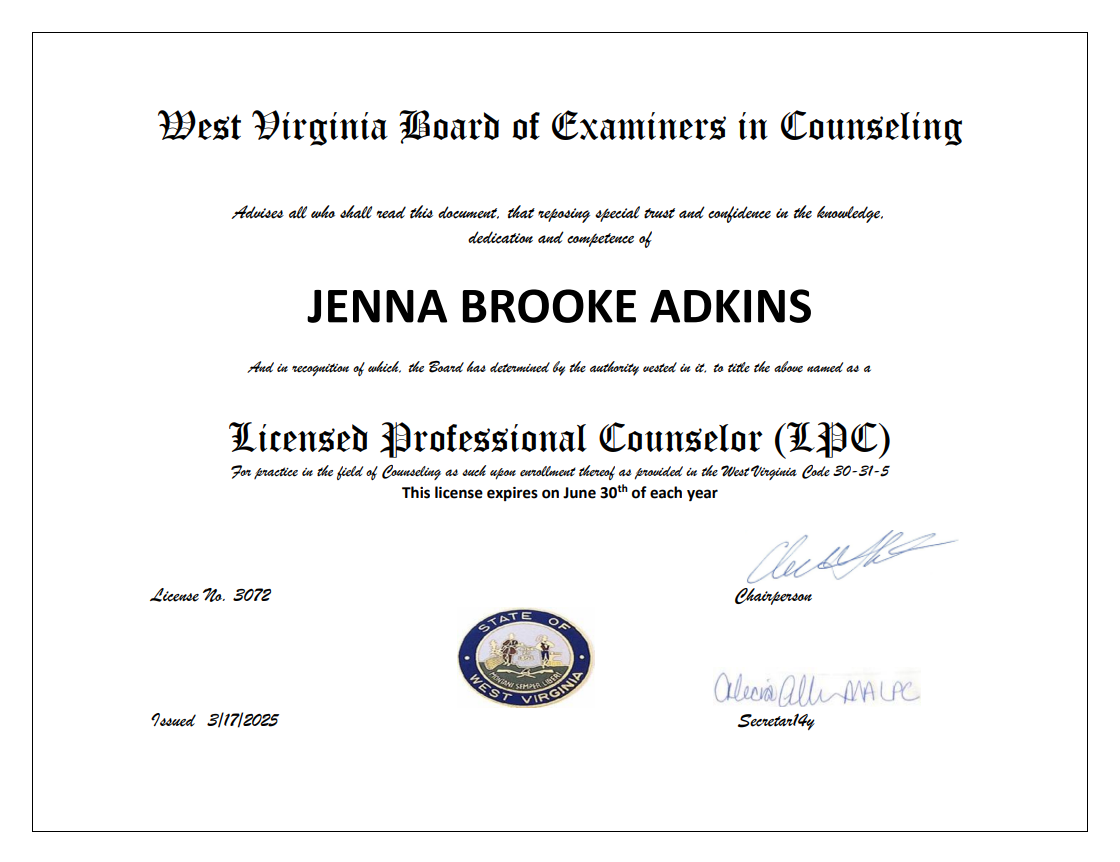
West Virginia Licensed Professional Counselor (LPC)
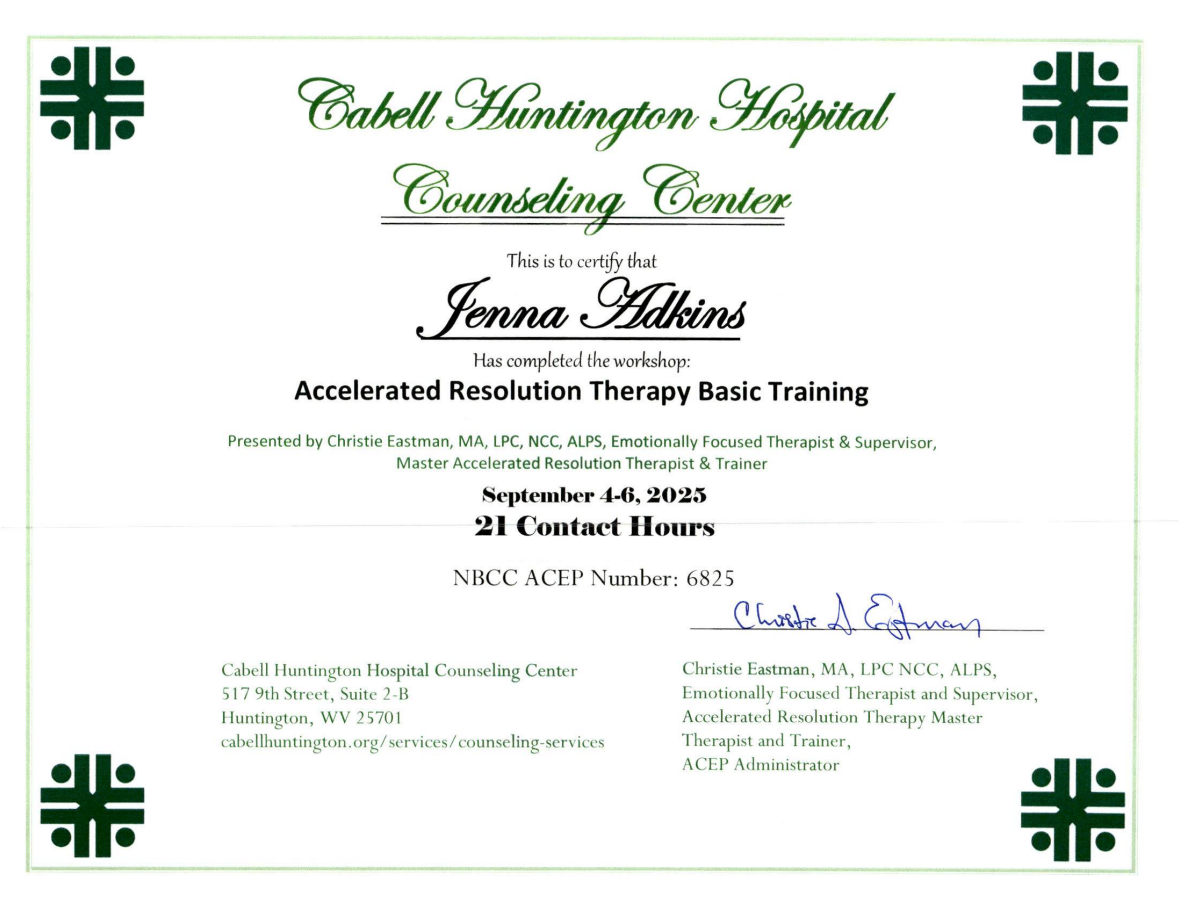
Accelerated Resolution Therapy (ART) Certificate
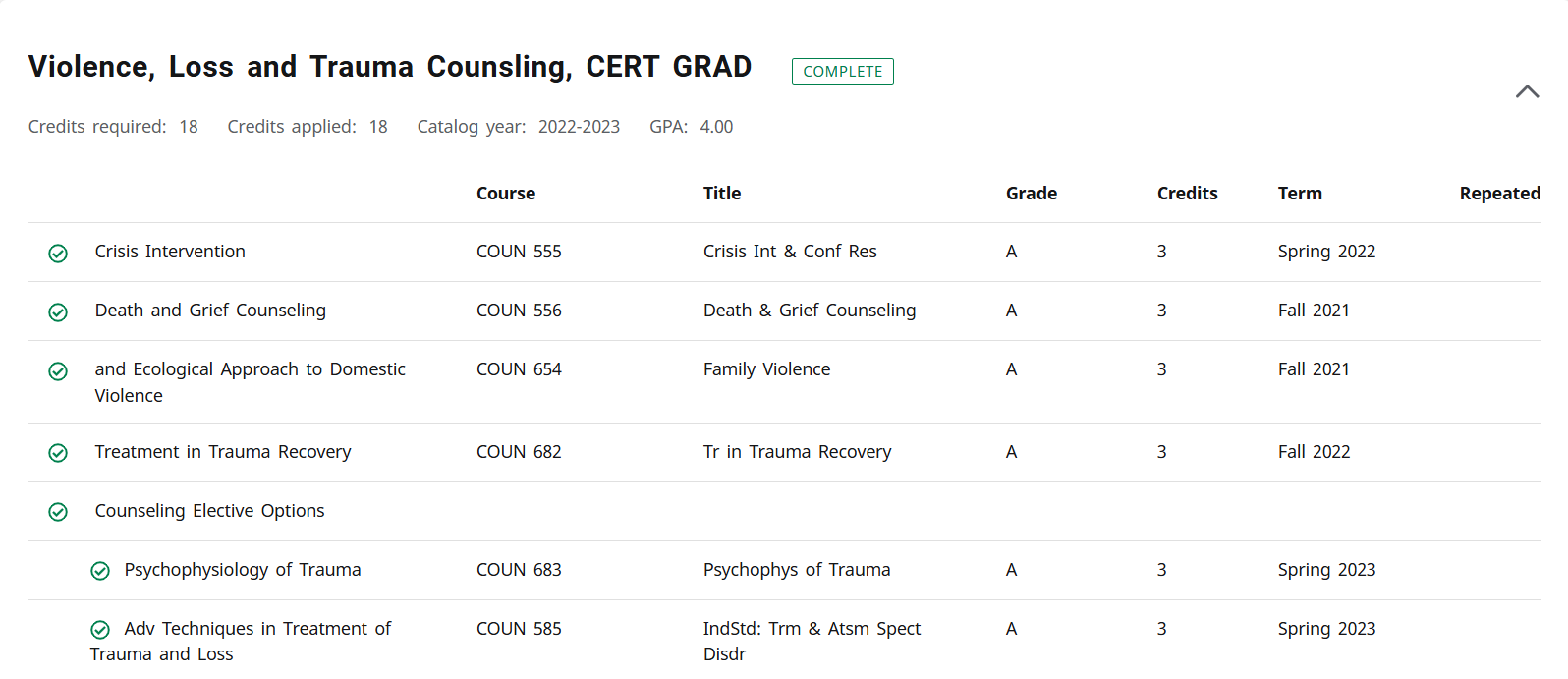
Certificate in Violence, Loss, and Trauma (VoLT)
Awaiting formal certificate to be mailed
Autism Across the Lifespan Conference:
Marshall University 2023
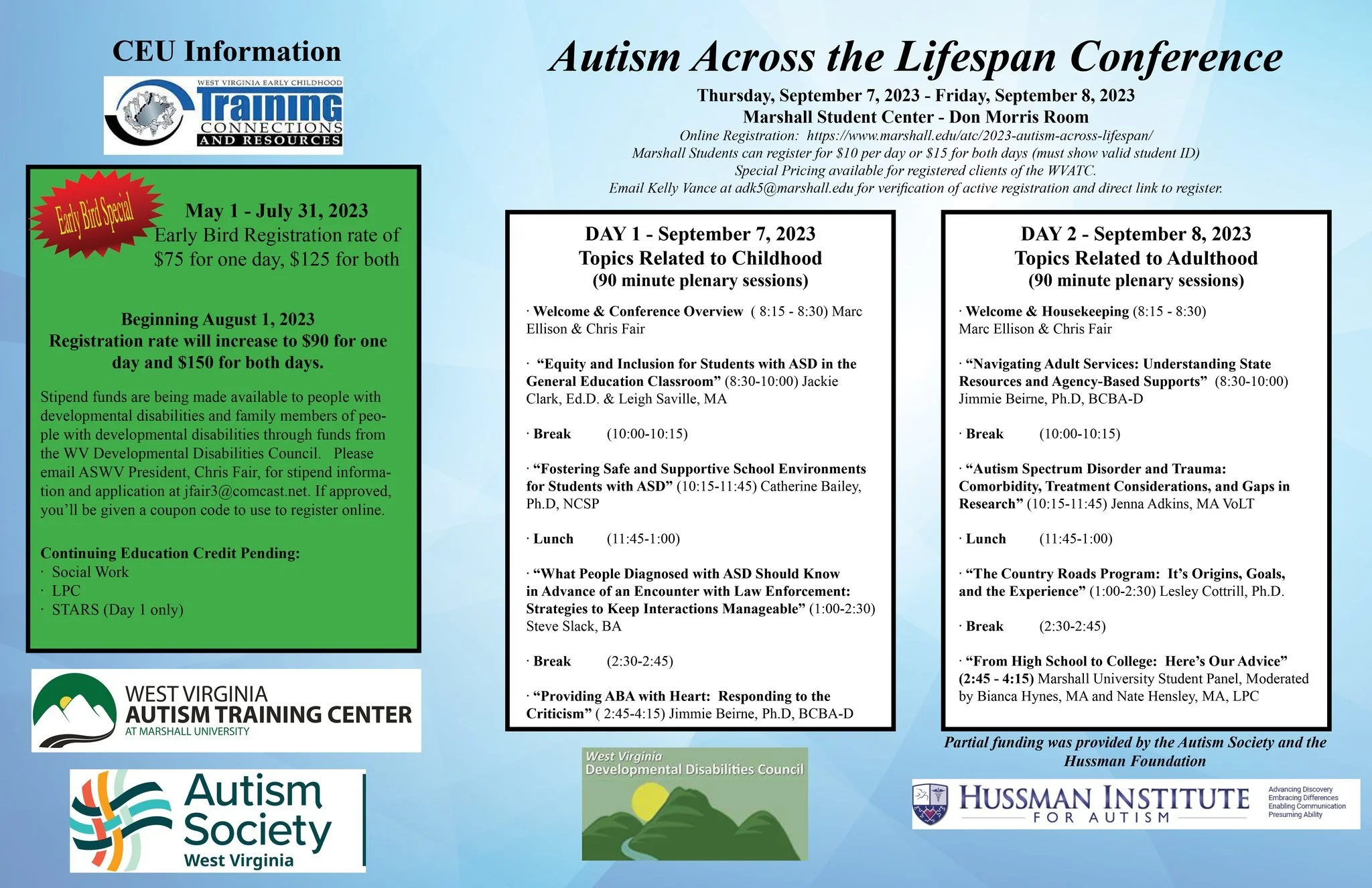
Research Presented:
Autism Spectrum Disorder and Trauma
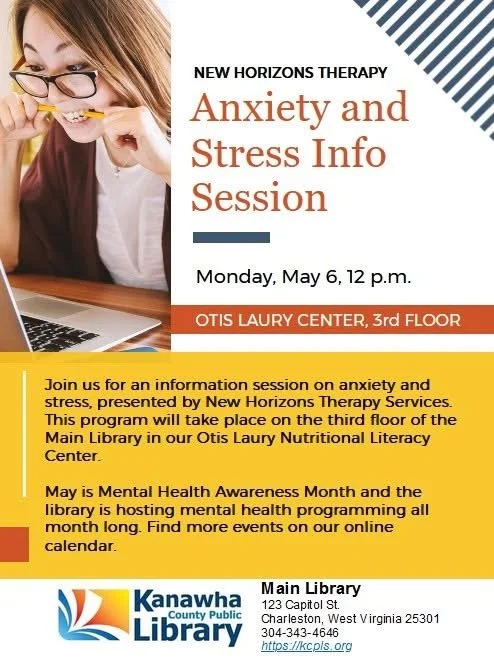
Community Psychoeducation - Kanawha County Public Library
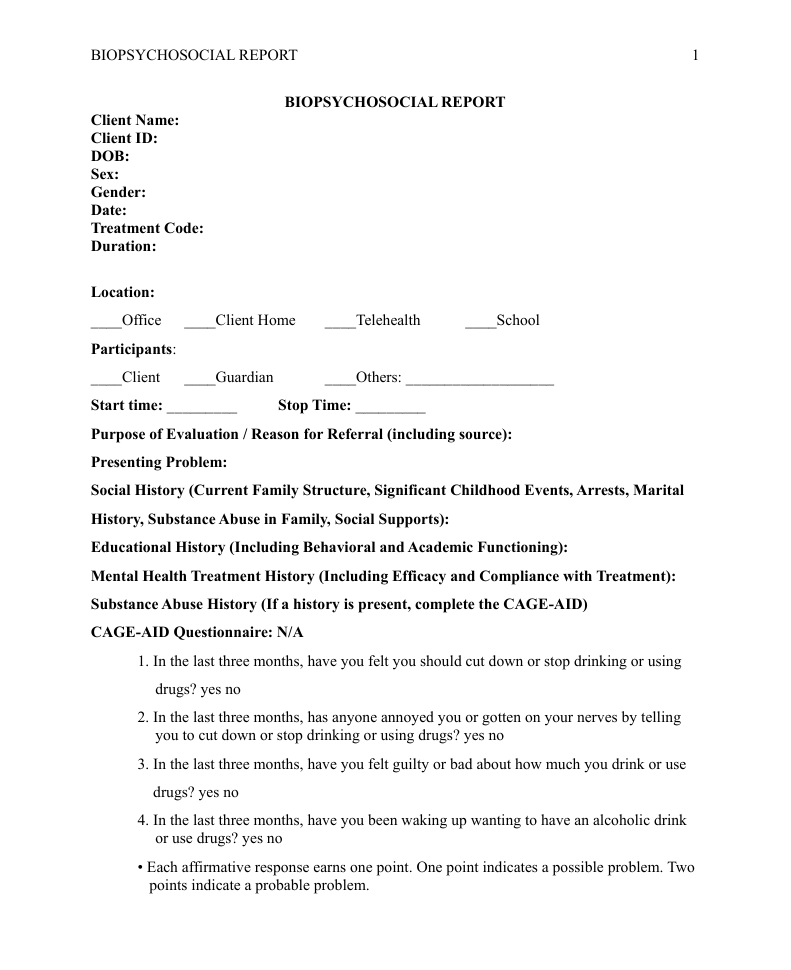
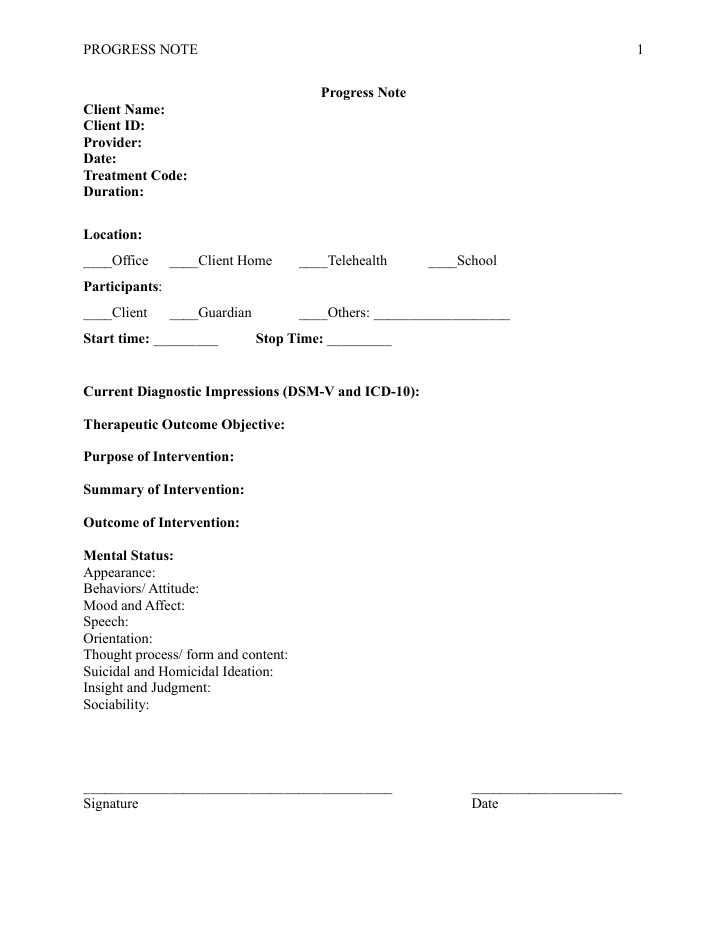
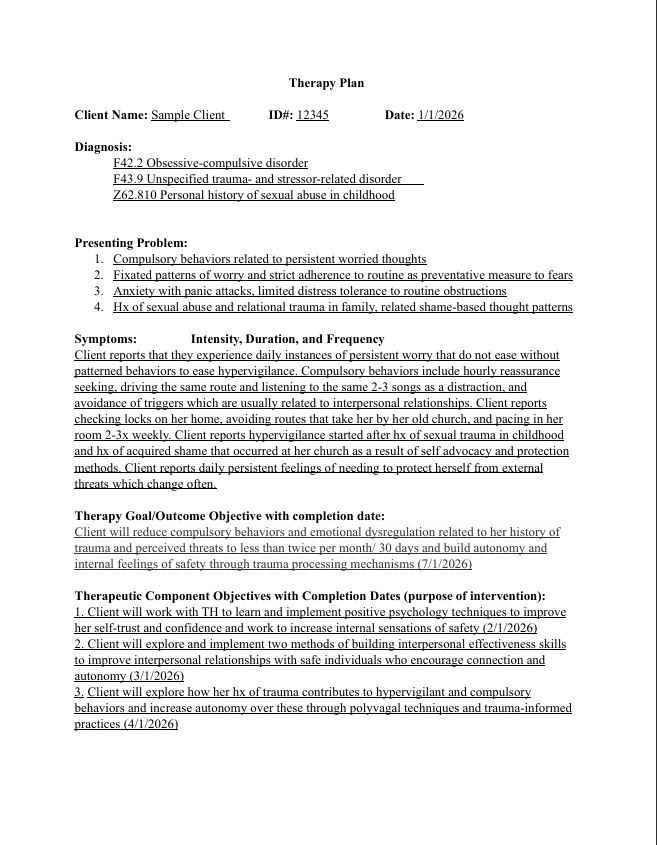
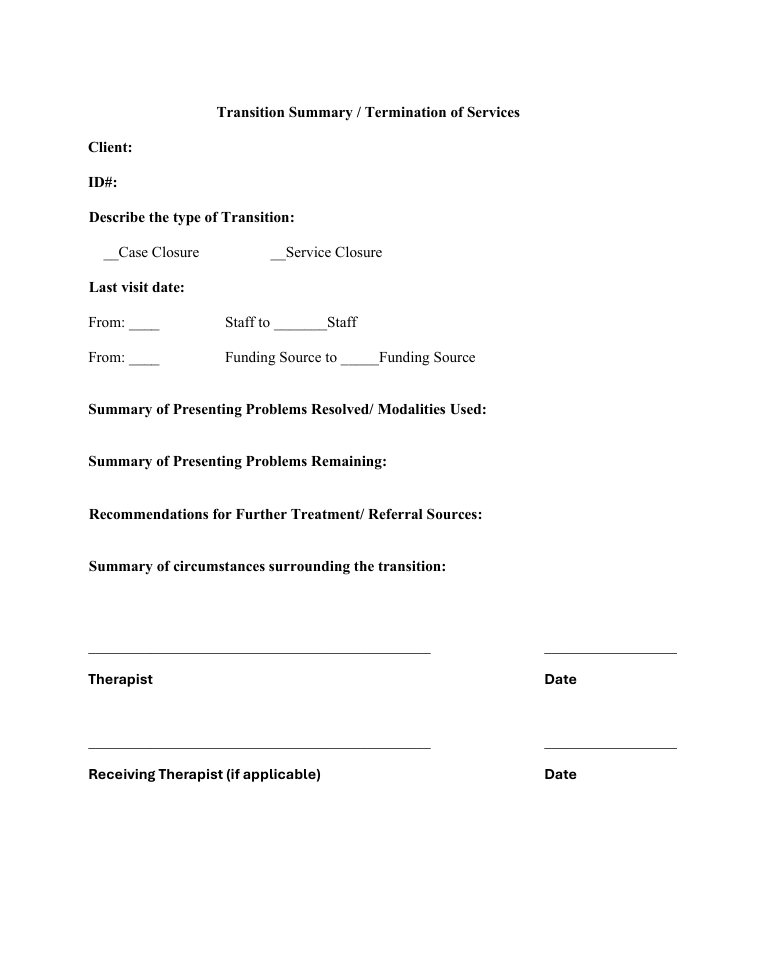
Counseling Forms and Documents
Supplemental Documents and Memberships